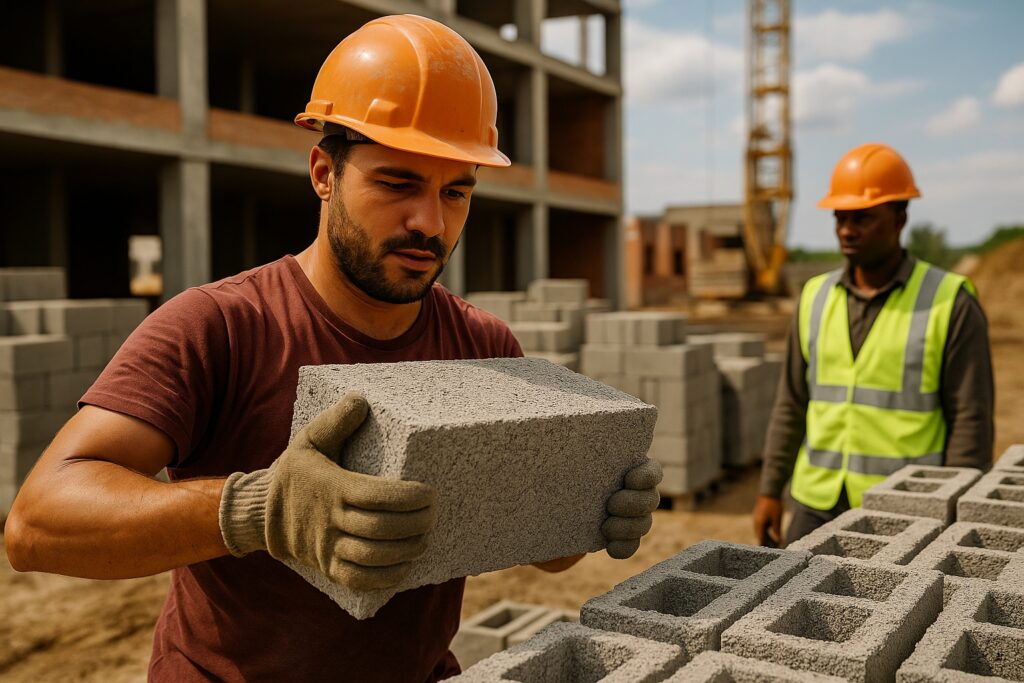

Concrete building blocks might not sound like the life of the party, but they’re the unsung heroes of construction. These sturdy little giants are the backbone of structures everywhere, quietly holding up homes and businesses while you sip your morning coffee. Who knew that something so solid could be so versatile?
Table of Contents
ToggleOverview of Concrete Building Blocks
Concrete building blocks are crucial elements in construction. They provide durability and strength, forming the backbone of many structures. Used in both residential and commercial applications, these blocks exhibit remarkable versatility.
Manufactured using cement, water, and aggregates, concrete blocks come in various sizes and shapes. The standard dimensions often include 8x8x16 inches, but custom sizes suit specific project requirements. These blocks retain excellent fire resistance, making them ideal for safety-conscious construction.
Applications range from load-bearing walls to decorative facades. Builders use them for basements, foundations, and retaining walls due to their robustness. In addition, concrete building blocks offer sound insulation properties, creating quieter environments within constructed spaces.
Structural integrity results from the interlocking nature of these blocks, allowing for stable and secure buildings. Modular construction approaches benefit significantly from their easy handling and installation. Contractors often prefer them for speed and efficiency in large-scale projects.
Recycling potential exists for concrete building blocks, promoting sustainable construction practices. Some manufacturers produce blocks with recycled materials, reducing environmental impact. Innovations in design enable enhanced thermal performance, improving energy efficiency in structures.
Overall, concrete building blocks play a vital role in modern architecture. Their contribution to structural stability, versatility, and sustainability makes them indispensable in the construction industry.
Benefits of Using Concrete Building Blocks
Concrete building blocks offer numerous advantages in construction projects, enhancing durability, cost-efficiency, and overall performance.
Durability and Strength
Durability ranks at the forefront of benefits offered by concrete building blocks. These blocks withstand extreme weather conditions, making them suitable for various climates. Their resistance to rot, pests, and mold ensures long-lasting performance. Strength also plays a significant role; concrete blocks maintain structural integrity under heavy loads. In many projects, their load-bearing capabilities meet or exceed building codes, providing added safety. Concrete’s compressive strength typically reaches around 4,000 psi, ensuring robust construction. This emphasis on strength and durability makes concrete building blocks a preferred choice among builders for both residential and commercial applications.
Cost-Effectiveness
Cost-effectiveness represents another critical benefit of concrete building blocks. Lower material costs combine with minimal maintenance needs to create an economical choice for builders. Labor efficiency increases due to the modular design, allowing for quicker installation. This advantage can lead to reduced labor expenses and shorter project timelines. Long-term energy savings arise from the excellent insulation properties of concrete blocks, further easing financial burdens. Additionally, their durability translates into fewer repairs over time, highlighting a significant return on investment. Choosing concrete building blocks results in a solid economic strategy for construction projects.
Types of Concrete Building Blocks
Concrete building blocks come in several types, each serving different purposes in construction projects. Understanding these variations helps in selecting the right block for specific needs.
Hollow Blocks
Hollow blocks feature a hollow core, which offers several advantages. These blocks are lighter than solid counterparts, making them easier to handle and transport. Their design improves insulation, enhancing energy efficiency in buildings. Commonly used in non-load bearing walls, they provide effective sound and thermal insulation. These blocks also reduce concrete usage, contributing to cost savings in large projects.
Solid Blocks
Solid blocks consist of uniform concrete mass, providing exceptional strength. Builders often use them for load-bearing walls, as they support heavy weights effectively. High compressive strength, typically reaching 4,000 psi, makes them ideal for foundations and structural applications. Their dense nature contributes to excellent fire resistance and sound insulation. Often preferred for critical structural elements, they ensure long-lasting stability.
Interlocking Blocks
Interlocking blocks feature a unique design that promotes easy assembly without mortar. Their shape allows them to fit together securely, enhancing structural integrity. Often utilized in retaining walls and modular construction, they simplify building processes. These blocks facilitate rapid installation, significantly reducing labor time and costs. Their versatility allows for various applications, including landscaping and garden walls.
Applications of Concrete Building Blocks
Concrete building blocks serve various applications in the construction industry, enhancing both residential and commercial structures.
Residential Construction
In residential construction, concrete building blocks provide strength and durability. They construct load-bearing walls, ensuring stability and longevity in homes. Many builders favor these blocks for their excellent insulation properties, contributing to energy efficiency and comfort. Additionally, they form durable foundations, which are critical for supporting the entire structure. Their fire-resistant nature offers peace of mind to homeowners, creating safer living environments. Prefabrication options also streamline construction timelines, minimizing labor costs and allowing for faster project completion.
Commercial Construction
Concrete building blocks play a vital role in commercial construction projects. Due to their high compressive strength, they support heavy loads in large structures like warehouses and retail stores. Builders often choose these blocks for their versatility, allowing for various designs in facades and interior walls. Sound insulation properties help create quieter work environments, appealing to businesses. The modular design also simplifies construction, enabling swift assembly and reducing labor efforts. Cost efficiency often results from their durability, making them a preferred choice for commercial developments.
Landscaping Projects
In landscaping projects, concrete building blocks offer practical solutions. They create retaining walls that prevent soil erosion and manage rainfall runoff effectively. The aesthetic appeal of decorative blocks enhances landscaping while providing functional benefits. Various shapes and sizes allow for creative design options in garden walls, pathways, and raised flower beds. Durability ensures that these structures withstand outdoor elements for years without significant maintenance. Additionally, their interlocking features facilitate easy installation, making landscaping more accessible and efficient for both professionals and DIY enthusiasts.
Concrete building blocks play a vital role in the construction industry. Their unmatched strength and versatility make them indispensable for various applications. Whether in residential or commercial projects these blocks provide essential support and stability while enhancing energy efficiency.
The range of types available ensures that there’s a suitable option for every construction need. From load-bearing walls to decorative facades concrete building blocks offer durability and cost-effectiveness that builders can rely on. Their ability to withstand extreme weather conditions further solidifies their status as a top choice for modern architecture.
As construction practices evolve concrete building blocks will undoubtedly continue to be a cornerstone of sustainable and efficient building solutions. Their benefits extend beyond structural integrity making them a smart investment for any construction project.