Hard water leaves soap scum on your shower doors. High mineral content clogs your appliances. Sediment and contaminants sneak through municipal treatment plants. If you’re dealing with any of these issues, a whole house water softener and filter system tackles them at the source, right where water enters your home. These systems aren’t just about convenience. They protect your plumbing, extend appliance lifespan, and deliver cleaner water to every tap. But understanding what you need, how these systems work together, and what’s involved in installation can save you thousands in mistakes.
Table of Contents
ToggleKey Takeaways
- A whole house water softener and filter system combines ion-exchange softening and multi-stage filtration to address both hard water minerals and contaminants at your main water line.
- Installing both a water softener and filter protects plumbing, extends appliance lifespan by 30-50%, and reduces energy costs by eliminating scale buildup and improving efficiency.
- Proper sizing requires knowing your water hardness level (GPG), daily usage (typically 300-400 gallons for a family of four), and intended regeneration cycle to calculate required grain capacity.
- Salt-based softeners remain the most effective for hard water above 15 GPG, but check local codes first as some jurisdictions restrict them due to environmental concerns about chloride discharge.
- Installation sequence matters: sediment filter → water softener → carbon filter, with monthly salt checks, filter replacements every 3-12 months, and annual resin cleaning to maintain peak performance.
- Professional inspection every 2-3 years prevents costly failures, while proper maintenance ensures your water softener and filter system delivers clean, soft water for 15-20 years.
What Is a Whole House Water Softener and Filter System?
A whole house water treatment system combines two distinct functions: softening and filtration. The system typically installs at your main water line, treating all water before it branches to fixtures, appliances, and faucets.
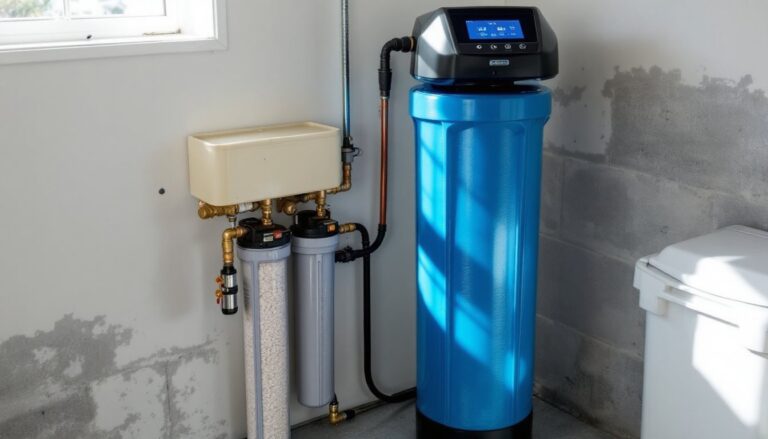
A water softener uses an ion-exchange process to remove hardness minerals, primarily calcium and magnesium. These minerals measure in grains per gallon (GPG): anything above 7 GPG is considered hard water. The softener swaps those minerals for sodium or potassium ions using resin beads housed in a tank. Periodically, the system regenerates by flushing the resin with brine from a salt tank.
A whole house filter addresses different concerns: sediment, chlorine, volatile organic compounds (VOCs), heavy metals, and other contaminants. Filter types vary, sediment filters catch rust and particulates, carbon filters remove chlorine and odors, and specialized media target iron or sulfur. Some homeowners use multiple filter stages.
These two components work in tandem but serve separate roles. Filtration removes contaminants: softening prevents scale buildup. Installing both ensures comprehensive water treatment that protects your home’s infrastructure and improves water quality for drinking, bathing, and cleaning.
Why You Need Both a Water Softener and Filter for Your Home
Hard water alone won’t harm you, but it wreaks havoc on your home. Scale deposits clog pipes, coat heating elements in water heaters (reducing efficiency by up to 30%), and leave white film on dishes and glassware. Soap doesn’t lather properly in hard water, forcing you to use more detergent and shampoo.
But softening doesn’t address contaminants. Municipal water may contain chlorine (added for disinfection), lead from old pipes, or agricultural runoff. Well water introduces its own challenges: bacteria, nitrates, iron, and sulfur. A softener won’t remove these.
That’s why pairing a softener with filtration makes sense. The filter handles contaminants before they reach your taps. The softener protects your plumbing and appliances. Together, they create a layered defense that tackles both safety and maintenance concerns.
Key Benefits of Installing a Whole House System
Appliance protection. Water heaters, dishwashers, and washing machines last longer when you eliminate scale buildup. Industry studies show softened water can extend appliance life by 30-50%.
Lower operating costs. Scale-free heating elements work more efficiently. You’ll see reduced energy bills, and you’ll use less soap and detergent, soft water lathers easily.
Improved water quality. Filtration removes chlorine taste and odor, sediment, and potential health hazards like lead or pesticides. Reviews of top-tested water filters highlight systems that address these concerns effectively.
Better for skin and hair. Softened, filtered water doesn’t leave mineral residue or harsh chemicals. Many homeowners report softer skin and shinier hair after installation.
Plumbing longevity. Scale narrows pipes over time, reducing water pressure and eventually requiring costly re-piping. Soft water prevents this buildup.
Types of Whole House Water Treatment Systems
Salt-based water softeners remain the gold standard for treating hard water. They use sodium chloride (table salt) or potassium chloride in the regeneration cycle. Expect to refill the brine tank every 4-8 weeks depending on water hardness and household size. These systems handle very hard water (15+ GPG) effectively but add trace sodium to your water, important for those on low-sodium diets.
Salt-free conditioners (also called descalers) don’t actually remove hardness minerals. Instead, they alter the mineral structure so scale doesn’t adhere to surfaces. These work for moderate hardness but won’t deliver the same results as ion-exchange softeners. No salt, no electricity, and minimal maintenance make them appealing for some installations.
Sediment filters are the first line of defense. Typically rated at 5, 10, or 20 microns, they catch dirt, rust, and particulates. Install these upstream of other components to protect more expensive filters and the softener itself.
Carbon block or GAC (granular activated carbon) filters remove chlorine, VOCs, and improve taste and odor. Carbon filters require replacement every 6-12 months depending on usage and water quality. They’re essential if your water comes from a municipal source that uses chlorine disinfection.
Reverse osmosis (RO) systems for whole house use are rare and expensive, but they offer the most thorough filtration, removing up to 99% of contaminants including dissolved solids, heavy metals, and even some pharmaceuticals. Most homeowners install RO at point-of-use (kitchen sink) rather than whole house due to cost and water waste.
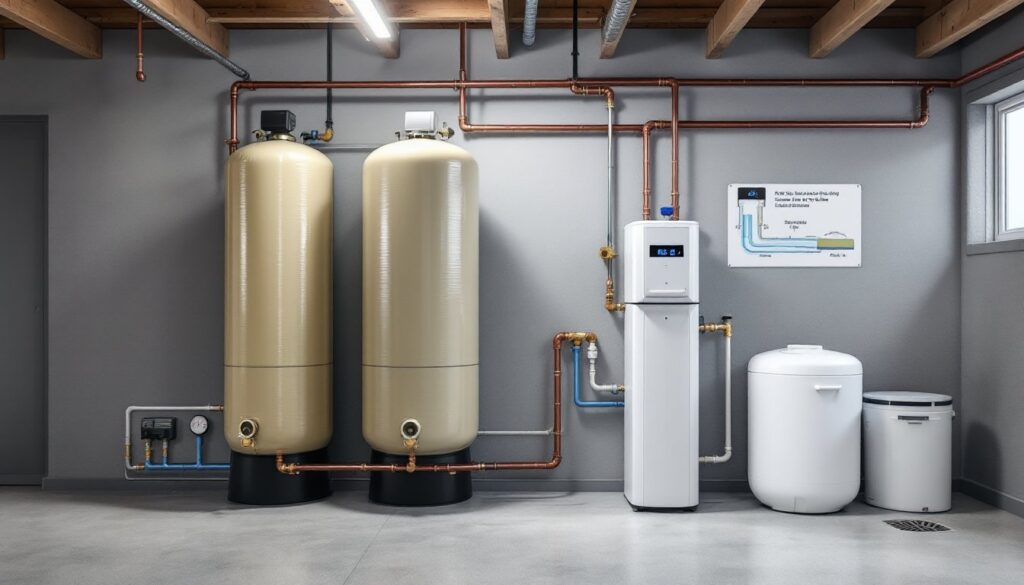
Combination systems package a softener and multi-stage filtration in one unit. These simplify installation and save space but may cost more upfront. Brands often include sediment pre-filters, carbon filtration, and salt-based softening in a single integrated cabinet.
How to Choose the Right System for Your Home
Start with a water test. You need to know your water hardness (GPG), pH, iron content, and any contaminants present. Municipal water customers can request a Consumer Confidence Report from their utility. Well owners should test annually, labs can analyze for bacteria, nitrates, heavy metals, and more.
Size your softener based on household water usage and hardness level. A family of four typically uses 300-400 gallons per day. Multiply daily usage by grains of hardness, then by days between regeneration cycles (usually 7-10 days). This gives you the grain capacity you need. For example: 350 gallons/day × 10 GPG × 7 days = 24,500 grain capacity. Most residential softeners range from 24,000 to 64,000 grains.
Match filter types to your water issues. Sediment problems require a 5-micron pre-filter. Chlorine taste needs carbon filtration. Iron staining (above 0.3 ppm) may need an iron filter or oxidizing system before the softener, iron fouls softener resin quickly.
Consider flow rate. Whole house systems must keep up with peak demand, multiple showers, dishwasher, and washing machine running simultaneously. Most homes need a system rated for 10-15 gallons per minute (GPM). Undersized systems cause pressure drops.
Check local codes. Some jurisdictions restrict salt-based softeners due to environmental concerns about chloride discharge into wastewater. California, for instance, has strict regulations in some counties. You may need a discharge permit or be required to install a salt-free alternative.
Budget realistically. A quality salt-based softener costs $800-$2,500 for the unit alone. Whole house filters add $300-$1,500 depending on stages and media. Professional installation runs $500-$1,500. While costs vary by region and system complexity, planning tools on sites like HomeAdvisor can help estimate local pricing.
Installation Guide: What Homeowners Need to Know
This is advanced DIY. You’ll work with your main water line, possibly drain lines, and electrical for the softener controller. If you’re comfortable with PVC or copper plumbing and basic electrical, you can tackle this. Otherwise, hire a licensed plumber.
Location matters. Install near your water main, before the line branches to your water heater and fixtures. You need access to a drain for backwash and regeneration discharge, a power outlet (standard 120V), and enough space, softeners and filter housings take up 2-4 feet of floor space. Basements, garages, and utility rooms work well. Protect from freezing.
Installation sequence: Sediment filter → water softener → carbon filter (if separate). Pre-filtration protects the softener resin. Post-softening carbon removes any residual tastes.
Step-by-step overview:
- Shut off main water and drain lines. Open a faucet at the highest and lowest points to fully drain.
- Cut into the main line after the meter and shutoff valve. Use a tubing cutter for copper: a hacksaw or reciprocating saw for PVC. Measure twice.
- Install bypass valves on the softener. These let you isolate the unit for service without shutting off house water.
- Connect inlet and outlet using appropriate fittings, 1-inch NPT threads are common on residential softeners. Use Teflon tape on threads. If transitioning from copper to the softener, use compression or SharkBite fittings for ease.
- Run drain line from the softener to a nearby drain, standpipe, or utility sink. The line should have an air gap to prevent backflow, check local plumbing codes. Use 1/2-inch rigid tubing, not flexible hose (it can kink).
- Fill brine tank with softener salt (sodium chloride pellets, not rock salt). Add water to the fill line.
- Plug in and program the controller. Set hardness level, regeneration schedule, and time of day for regen cycles (typically 2-4 AM when water use is low).
- Flush the system. Run water through the softener in bypass mode first, then switch to service mode and flush faucets for several minutes.
Permit requirements: Most jurisdictions don’t require permits for water treatment equipment, but always check locally. If you’re adding new drain lines or electrical circuits, those may trigger permit and inspection requirements.
Safety note: Wear safety glasses when cutting pipes. If soldering copper, use a flame-resistant cloth behind joints and keep a fire extinguisher nearby.
Maintenance Tips to Keep Your System Running Smoothly
Salt level checks. Inspect the brine tank monthly. Keep it at least 1/4 full of salt. If you see a salt bridge (a hard crust above water with empty space below), break it up with a broom handle. Salt mushing, a sludge layer at the bottom, requires tank cleaning.
Filter cartridge replacement depends on your water quality and usage. Sediment filters may need changing every 3-6 months if you have heavy particulates. Carbon filters typically last 6-12 months. Mark replacement dates on your calendar. Reduced water pressure is a sign filters are clogged.
Resin bed cleaning. Softener resin lasts 10-20 years, but iron, chlorine, and sediment can foul it. Use a resin cleaner annually if you have iron or chlorine in your water, pour it into the brine tank before a regeneration cycle.
Sanitizing. Once a year, sanitize the system with a bleach solution or softener-specific sanitizer. This prevents bacterial growth, especially in the brine tank.
Check for salt mushing and bridging. If your water feels hard even though a full salt tank, inspect inside. Mushing happens when salt dissolves and recrystallizes into sludge. Empty the tank, clean it, and refill with fresh pellets.
Monitor regeneration cycles. Your softener should regenerate based on water usage, not just a timer. If it’s regenerating too often, you’re wasting salt and water. Adjust settings or check for leaks.
Professional service. Even with DIY maintenance, have a water treatment pro inspect your system every 2-3 years. They’ll test resin effectiveness, check valve operation, and verify settings. Resources like Family Handyman offer troubleshooting guides for common issues, but complex problems need expert diagnosis.
Winter prep. If your system is in an unheated space, insulate it or add a heater. Frozen softeners can crack tanks and damage valves. Drain the system if it will sit unused in freezing conditions.
Proper maintenance extends system life and ensures consistent performance. Neglected softeners waste salt, deliver hard water, and fail prematurely. Stay on top of the basics, and your investment will pay dividends for 15-20 years.