
Imagine walking into a space where the lighting makes you feel like you’ve stepped into a scene from a movie. Architectural lighting design does just that—it transforms ordinary spaces into extraordinary experiences. It’s not just about flipping a switch; it’s about creating an atmosphere that can evoke emotions, highlight features, and even make a cup of coffee taste better. Yes, really!
Overview of Architectural Lighting Design
Architectural lighting design encompasses the planning and execution of lighting systems that enhance architectural features. This discipline aims to create a cohesive visual experience that enhances both functionality and aesthetics. Designers consider not only the technical aspects of lighting but also its emotional impact on space.
A well-implemented lighting design highlights architectural elements, such as textures and colors. By focusing on key features, it draws attention and adds depth to the environment. Specific lighting techniques, such as accent, ambient, and task lighting, work together to form a balanced atmosphere throughout the space.
Functional requirements influence the choice of lighting fixtures and placements. Examples include pathway lighting for safety or task lighting in workspaces. Each must align with the overall design scheme to promote usability and comfort.
Natural light also plays a crucial role in architectural lighting design. Designers often integrate daylighting strategies to enhance energy efficiency and create a dynamic interplay between indoor and outdoor spaces. The use of windows and skylights allows for the blending of natural light, contributing to the overall mood of the environment.
Color temperature significantly affects perceptions of space. Warm lighting creates a cozy atmosphere, while cooler tones may evoke calmness or modernity. Choosing the right color temperature enhances the emotional responses of occupants, influencing their overall experience.
By understanding the interplay between light and architecture, designers can transform spaces into immersive experiences. Architectural lighting design combines creativity and technical knowledge to facilitate spaces that resonate with individuals while catering to their practical needs.
Key Principles of Architectural Lighting Design
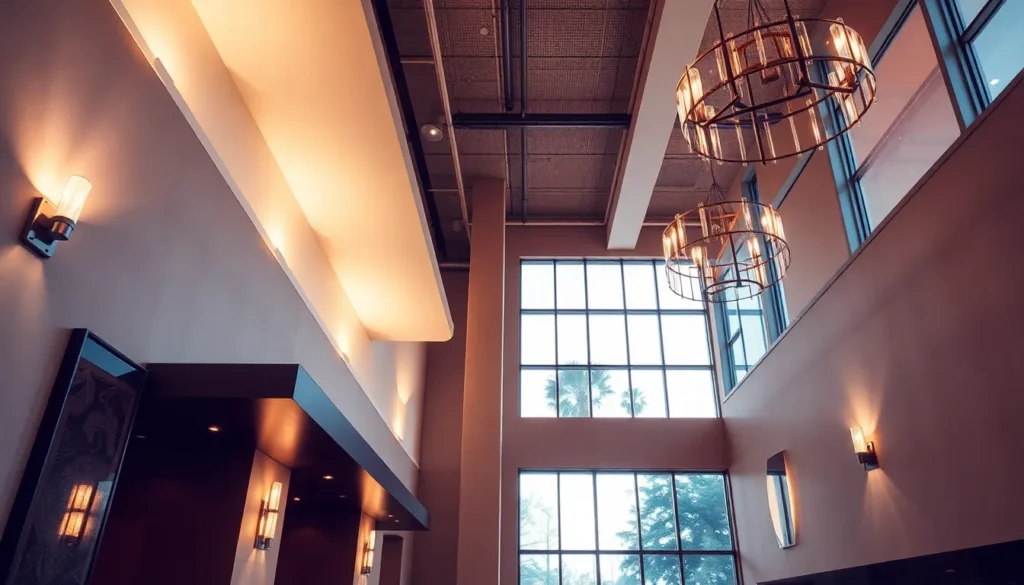
Architectural lighting design emphasizes both functionality and visual appeal. Designers create lighting plans that serve practical needs while enhancing the aesthetics of a space.
Functionality and Aesthetics
Functionality dictates the choice of fixtures and placements, ensuring spaces are usable and comfortable. Aesthetically, lighting enhances architectural features, crafting a cohesive visual narrative. Accent lighting highlights prominent elements, while ambient lighting creates an overall atmosphere. Task lighting supports activities by focusing on specific areas, balancing the interaction between beauty and practicality. Well-executed designs allow spaces to feel inviting without sacrificing usability. Integrating these aspects ensures that each lighting choice contributes meaningfully to the environment.
Energy Efficiency
Energy efficiency plays a critical role in modern architectural lighting design. Designers prioritize sustainable practices, opting for LED fixtures that consume less power yet deliver adequate illumination. Incorporating natural light is essential, connecting interior environments with their surroundings. This integration reduces reliance on artificial sources, leading to lower utility costs. Using smart controls enhances energy savings by allowing adjustments based on occupancy or natural light levels. Ultimately, efficient designs minimize environmental impact while maintaining effective performance across various settings.
User Experience
User experience remains at the forefront of architectural lighting design. Lighting influences emotions and perceptions, impacting how individuals interact with their surroundings. Considerations include color temperature and intensity, which shape moods and behaviors. Warm lighting fosters relaxation in social spaces, while cooler tones enhance focus in work environments. Thoughtful placement of fixtures creates visually stimulating patterns, guiding users through different areas intuitively. Designers strive to craft atmospheres that resonate with occupants, making spaces feel personal and inviting. Each aspect contributes to an immersive experience that elevates everyday interactions.
Types of Architectural Lighting
Architectural lighting design comprises various types that enhance visual appeal and functionality. Each type serves specific purposes and contributes to the overall atmosphere within spaces.
Ambient Lighting
Ambient lighting creates a uniform overall light level in a space. It provides general illumination that allows occupants to navigate comfortably. Designers often use ceiling-mounted fixtures or recessed lights to achieve this effect. Warm color temperatures in ambient lighting foster a welcoming environment. When integrated well, ambient lighting shapes perceptions of space while complementing architectural features.
Task Lighting
Task lighting focuses on illuminating specific areas for particular activities. This type of lighting emphasizes functionality, enabling individuals to perform tasks such as reading, cooking, or working without strain. Designers strategically place desk lamps, under-cabinet lights, or pendant fixtures to enhance usability. Choosing appropriate brightness levels ensures comfort while maintaining the overall aesthetic. Well-executed task lighting improves productivity and enhances user experience.
Accent Lighting
Accent lighting highlights architectural features or artwork within a space. It draws attention to specific elements and adds depth and character to the environment. Adjustable spotlights or wall-mounted fixtures often serve this purpose. High contrast in brightness distinguishes accent lighting from surrounding ambient light. This dramatic effect enhances visual interest and creates focal points throughout the area. Effective use of accent lighting elevates spaces and enriches the overall experience.
Techniques in Architectural Lighting Design
Effective architectural lighting design incorporates various techniques to enhance the visual experience of spaces. Key methods include layering light and utilizing color temperature to create desired moods and functionality.
Layering Light
Layering light involves combining different types of lighting to achieve depth and versatility in a space. Ambient lighting provides general illumination, while task lighting delivers focused light for specific activities. Accent lighting draws attention to architectural features or artwork, creating focal points. Designers strategically place fixtures to ensure each layer complements the others, generating a rich, inviting atmosphere. This technique not only enhances the usability of a space but also highlights its aesthetic qualities.
Using Color Temperature
Using color temperature significantly impacts how individuals perceive and interact with a space. Warm light, typically around 2700K to 3000K, fosters a cozy and inviting environment, ideal for living areas. Cooler tones, ranging from 4000K to 5000K, promote a sense of calm and modernity, making them suitable for workspaces. Selecting the appropriate color temperature contributes to the overall atmosphere, directly influencing occupants’ emotions and behaviors. Through thoughtful combinations of temperatures, designers can create spaces that resonate with their intended functions and enhance user experiences.
Trends in Architectural Lighting Design
Architectural lighting design continues to evolve, reflecting advancements in technology and evolving aesthetic preferences. Designers increasingly integrate innovative solutions to enhance both functionality and user experience.
Smart Lighting Solutions
Smart lighting solutions play a significant role in contemporary design. These systems allow for customization of brightness and color, adjusting to user needs or time of day. Remote control options, including smartphone apps and voice commands, enhance convenience and accessibility. Integration with smart home systems creates seamless experiences that improve energy efficiency while maximizing comfort. Such solutions support dynamic environments tailored to various activities, making spaces more adaptable to user preferences.
Sustainable Practices
Sustainable practices remain at the forefront of architectural lighting design. Designers prioritize energy-efficient LED fixtures that reduce electricity consumption and lower utility costs. Utilizing natural light is also crucial, as it enhances spaces and connects indoor and outdoor environments. Incorporating daylight sensors maximizes daylight use, ensuring artificial lighting activates only when necessary. Designers intentionally choose materials that minimize environmental impact, contributing to a healthier planet. These practices foster a sustainable future while creating inviting and functional spaces.
Architectural lighting design is a powerful tool that shapes how individuals experience spaces. By skillfully balancing functionality with aesthetics, designers create environments that evoke emotions and enhance daily activities. The thoughtful integration of different lighting types and color temperatures not only highlights architectural features but also fosters inviting atmospheres.
As trends evolve toward smart lighting and sustainable practices, the potential for creating immersive experiences continues to grow. Prioritizing energy efficiency and user experience ensures that modern designs meet both practical needs and environmental responsibilities. Ultimately, the art of architectural lighting design transforms ordinary settings into extraordinary realms, enriching the way people interact with their surroundings.