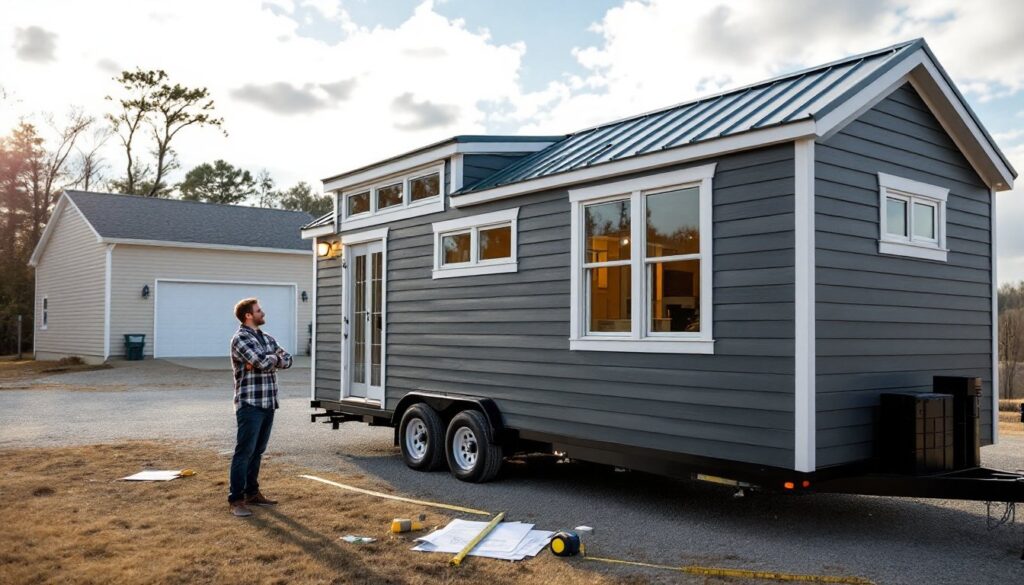

The tiny house movement has exploded over the past decade, but there’s surprising confusion about what actually qualifies as “tiny.” Walk into any planning office or scroll through tiny house listings, and you’ll find wildly different numbers thrown around. Some builders market 600-square-foot structures as tiny homes, while purists insist anything over 400 square feet misses the mark entirely. Understanding these size standards matters whether you’re planning to build, buy, or simply need to navigate local zoning regulations. The square footage definition affects everything from building codes and property taxes to where you can legally park or place your home.
Table of Contents
ToggleKey Takeaways
- A tiny house is officially defined as a dwelling with 400 square feet or less of interior living space, though some jurisdictions extend the definition to 500 square feet.
- Tiny houses on wheels range from 100 to 400 square feet depending on trailer size, while foundation-based tiny houses can reach 500+ square feet without road-width restrictions.
- Single occupants can comfortably live in 150–200 square feet with smart design, while couples typically need 250–350 square feet for adequate personal space and storage.
- Local zoning laws and building codes significantly impact the permissible square footage for tiny houses, with some cities requiring special permits or ADU classifications rather than permanent dwelling status.
- The 400-square-foot standard emerged from practical trailer construction constraints and intentional lifestyle goals to minimize consumption and reduce housing costs dramatically.
- Testing tiny house living before committing and conducting a space audit of your belongings helps ensure your chosen square footage matches your lifestyle needs and long-term plans.
The Standard Definition: How Big Is a Tiny House?
Most industry experts and advocacy organizations define a tiny house as a dwelling with 400 square feet or less of interior living space. This figure has become the widely accepted ceiling, though there’s no universal legal definition that applies across all jurisdictions.
The measurement typically includes only the main floor area, lofts, sleeping platforms, and storage areas may or may not count depending on ceiling height. If a loft has less than 5 feet of headroom at any point, most building codes don’t consider it habitable space. That’s why many tiny houses on wheels advertise 200 square feet of main floor space but feel considerably larger with loft sleeping areas.
Some definitions push the upper limit to 500 square feet, particularly when distinguishing between tiny houses and small houses. Once you cross 600 square feet, you’ve firmly entered small house territory rather than tiny. For context, 400 square feet equals roughly a 20×20-foot footprint, about the size of a standard one-car garage.
Why 400 Square Feet Became the Industry Standard
The 400-square-foot threshold wasn’t pulled from thin air. It emerged from practical constraints of trailer-based construction and the desires of early tiny house advocates who wanted to challenge conventional housing norms.
Most tiny houses on wheels sit on trailers ranging from 20 to 28 feet long and 8.5 feet wide (the maximum width for road travel without special permits). A 24-foot trailer with standard framing leaves roughly 200-250 square feet of main floor space. Add a loft and you approach 400 square feet total.
The limit also reflects intentional lifestyle choices. Early tiny house pioneers aimed to reduce consumption, minimize environmental footprint, and lower housing costs dramatically. Keeping below 400 square feet forces ruthless prioritization of space, every cabinet, appliance, and piece of furniture must justify its existence. The 400-square-foot standard became a badge of commitment to simplified living rather than just a smaller version of conventional housing.
Different Types of Tiny Houses and Their Size Ranges
Not all tiny houses look alike, and their typical sizes vary based on foundation type and construction method.
Tiny houses on wheels (THOWs) represent the most common category. These structures are built on trailer chassis and range from 100 to 400 square feet. The smallest models (100-150 square feet) offer just enough room for a kitchenette, bathroom, and sleeping loft. Mid-range models (200-300 square feet) include more storage, larger kitchens, and sometimes ground-floor bedrooms. The upper limit of 400 square feet typically requires custom or tandem-axle trailers.
Foundation tiny houses are permanently anchored structures on traditional foundations. These range from 300 to 500 square feet and more easily accommodate plumbing, electrical, and HVAC systems than mobile versions. Because they don’t face road-width restrictions, foundation tiny houses can be wider and include features like full-size appliances and standard-height ceilings throughout.
Accessory Dwelling Units (ADUs) sometimes overlap with tiny house definitions. While ADUs can reach 1,200 square feet in some jurisdictions, smaller versions in the 400-600 square foot range share many design principles with tiny houses. These backyard cottages, garage conversions, or above-garage apartments offer independent living spaces on existing residential lots.
Shipping container homes modified into tiny dwellings typically work with standard 20-foot containers (160 square feet) or 40-foot containers (320 square feet). Combining multiple containers can push past tiny house limits, but single-container conversions fit comfortably within the definition.
How Tiny House Size Compares to Traditional Homes
The contrast between tiny houses and conventional homes is dramatic. The median new single-family home in the United States measures approximately 2,300 square feet, nearly six times larger than a 400-square-foot tiny house.
A typical studio apartment ranges from 400 to 600 square feet, making it comparable to or slightly larger than most tiny houses. But, studios rarely include lofts or vertical space utilization that characterizes tiny house design. A one-bedroom apartment averages 650-900 square feet, while two-bedroom units typically span 900-1,200 square feet.
Breaking it down to specific rooms highlights the space efficiency required in tiny living. A master bedroom in a conventional home averages 200-250 square feet, half the total footprint of many tiny houses. Standard walk-in closets alone consume 50-100 square feet, roughly equivalent to an entire tiny house bathroom.
Those exploring small space living often discover that vertical design and multi-functional furniture make 400 square feet feel more spacious than poorly designed larger spaces. Built-in storage, fold-down tables, and convertible sleeping areas maximize every inch.
For homeowners with large properties, the size difference becomes even starker. A three-bedroom, two-bath home commonly exceeds 1,800 square feet, enough space to fit four or five tiny houses. This comparison explains why tiny houses appeal to those seeking radical downsizing, simplified maintenance, and dramatically reduced utility costs.
Factors That Influence Tiny House Square Footage
Several practical considerations determine how large or small a tiny house should be for any given situation.
Occupancy needs rank first. A single person can manage comfortably in 150-200 square feet with smart design. Couples typically want 250-350 square feet for adequate personal space and storage. Families with children rarely find tiny houses under 400 square feet workable for extended periods, though some opt for multiple small structures on one property.
Mobility requirements heavily impact size. If you plan to move your tiny house regularly, staying at or below 8.5 feet wide and 13.5 feet tall avoids most oversize load permits. This generally caps total square footage around 300-350 feet. Stationary tiny houses on foundations can expand wider and potentially taller, reaching the 500-square-foot range while still qualifying as tiny.
Budget constraints play a significant role. Material costs, labor, and systems complexity all scale with size. A 200-square-foot tiny house might cost $30,000-50,000 when owner-built with quality materials. Expanding to 400 square feet can push costs to $60,000-90,000 or more with professional construction. Smaller footprints reduce not just initial costs but ongoing expenses for heating, cooling, and maintenance.
Local climate affects design choices that influence size. Harsh winter climates may necessitate thicker insulation and dedicated mechanical systems, consuming interior space. Warmer regions can incorporate outdoor living areas that effectively extend usable square footage without increasing the structure’s footprint.
Intended use matters considerably. A tiny house serving as a weekend retreat or guest cottage can function well at 150-200 square feet. Primary residences demand more storage, work surfaces, and living area, typically pushing toward 300-400 square feet for long-term livability.
Zoning Laws and Building Codes: How They Define Tiny House Size
Legal definitions of tiny houses vary widely by jurisdiction and significantly impact where and how you can build or place one.
Many municipalities use the International Residential Code (IRC) Appendix Q, adopted in 2018, which specifically addresses tiny houses. Appendix Q defines tiny houses as dwellings of 400 square feet or less, excluding lofts. It establishes minimum standards for ceiling height, emergency escape windows, and ladder/stairway requirements for lofts. But, not all jurisdictions have adopted Appendix Q, and some modify its provisions.
Minimum dwelling size requirements in traditional zoning codes often conflict with tiny house dimensions. Some cities mandate minimum square footages of 600, 800, or even 1,000 square feet for primary residences. These rules effectively prohibit tiny houses as permanent dwellings unless granted variances or located in special tiny house communities.
RV classification creates another legal pathway but with significant restrictions. Tiny houses on wheels meeting RVIA (Recreation Vehicle Industry Association) standards can be classified as recreational vehicles rather than permanent dwellings. This allows placement in RV parks but typically comes with time limits on consecutive occupancy, often 30 to 180 days. Real estate trends show increasing tension between tiny house advocates and traditional zoning frameworks.
Accessory Dwelling Unit (ADU) ordinances offer the most promising legal avenue in many areas. Cities increasingly allow ADUs on residential lots with specific size caps, commonly 800 to 1,200 square feet maximum. Smaller ADUs in the 400-500 square foot range fit both ADU regulations and tiny house definitions, providing a legal foundation tiny house while satisfying local codes.
Parking and placement rules often hinge on square footage. Structures under certain sizes may be classified as temporary or mobile, while larger ones require permanent foundations, utility connections, and full permitting as habitable structures. Always consult local planning departments before assuming a tiny house of any size is permissible.
Choosing the Right Square Footage for Your Needs
Selecting ideal tiny house square footage requires honest assessment of lifestyle, possessions, and long-term plans.
Start with a space audit of your current belongings. Tiny house living generally requires reducing possessions by 60-80%. If you own extensive collections, hobby equipment, or professional tools, you’ll need the upper end of the tiny house range or separate storage solutions. Ruthless decluttering before committing to a specific size prevents expensive design changes later.
Consider your daily routines. Do you cook elaborate meals requiring counter space and appliances? Plan for at least 250-300 square feet to accommodate a functional kitchen. Work from home? Dedicated desk space in a 200-square-foot house means sacrificing something else, usually dining area or living room seating. Those examining the definition of tiny houses quickly realize that lifestyle compatibility matters as much as square footage.
Test before committing. Rent tiny house accommodations for a week or weekend to experience different sizes firsthand. What feels cozy for three days might feel claustrophobic after three months. Many discover they need 50-100 more square feet than initially expected, or that they can manage with less.
Plan for growth or change. If children, aging parents, or business expansion are possibilities within five years, build slightly larger or design with addition potential. Adding 50 square feet during initial construction costs far less than renovating later. Alternatively, design for detached auxiliary buildings or outdoor living spaces that extend functional area without increasing the main structure’s footprint.
Balance ideal with legal reality. Your perfect size means nothing if local zoning prohibits it. Research local regulations thoroughly before finalizing plans. Sometimes staying at 399 square feet instead of 425 determines whether you need full residential permitting or can proceed as an accessory structure.
Most first-time tiny house dwellers find the 300-350 square foot range offers the best compromise between minimalist principles and practical livability for singles or couples.