Hard water isn’t just about the chalky buildup on faucets, it shortens appliance lifespans, leaves clothes dingy, and makes soaps work less effectively. Traditionally, water softeners used salt and ion exchange to strip out minerals, but they required bags of salt, routine backflushing, and added sodium to the water supply. Enter the salt-free water softener (more accurately, a salt-free water conditioner), which tackles scale formation differently. These systems don’t remove hardness minerals but neutralize them, preventing buildup while keeping beneficial minerals in the water. Homeowners looking to reduce maintenance, avoid wastewater, and go easier on the environment are increasingly turning to whole-house salt-free systems. This guide walks through how they work, what to expect, and how to install and maintain them.
Table of Contents
ToggleKey Takeaways
- A whole house salt-free water softener uses template-assisted crystallization (TAC) to prevent scale buildup without removing beneficial minerals, requiring no salt, electricity, or wastewater discharge.
- Salt-free water conditioners work best for moderate hardness levels (under 15 GPM) and are ideal for homeowners prioritizing low maintenance, environmental impact, and retaining mineral content for health.
- Installation of a salt-free water softener is a straightforward DIY project for most homeowners, requiring basic plumbing tools and typically costing $200-$500 if professional help is needed.
- Key features to prioritize when buying a whole house salt-free system include flow rate capacity (10-15 GPM for typical homes), media lifespan (5-7 years), NSF certifications, and a bypass valve for easy maintenance.
- Maintenance of salt-free water conditioners is minimal, involving quarterly leak inspections, sediment pre-filter replacements every 3-6 months, and media replacement every 5-7 years based on water hardness.
- Traditional ion-exchange softeners remain superior for severe hardness (over 15 GPM) and tankless water heaters, while salt-free systems excel at reducing sodium intake and cutting long-term operational costs.
What Is a Salt-Free Water Softener and How Does It Work?
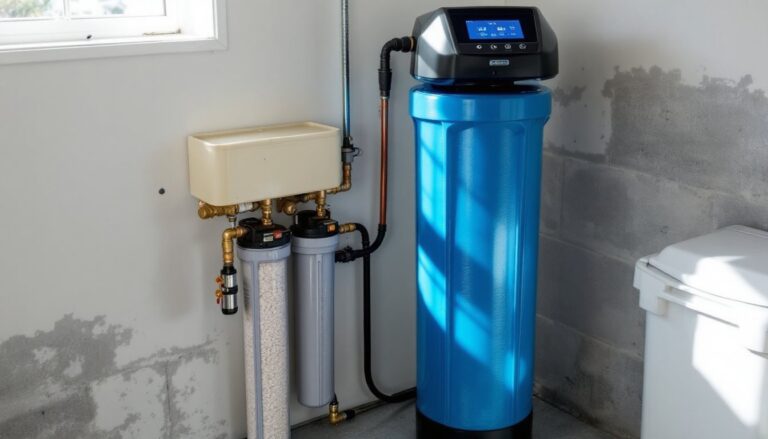
A salt-free water softener doesn’t actually soften water in the technical sense. True softening means removing calcium and magnesium ions through ion exchange, a process that requires salt (sodium chloride) or potassium chloride. Salt-free systems are water conditioners, using a process called template-assisted crystallization (TAC) or chelation.
Inside a TAC-based unit, water flows through a media bed coated with nucleation sites. These sites convert dissolved hardness minerals into microscopic crystal structures that stay suspended in the water rather than adhering to surfaces. The crystals flow through pipes and down drains without forming scale. Importantly, the minerals remain in the water, which means no reduction in total dissolved solids (TDS). Lab tests and soap testing will still show “hard” water, but scale buildup in pipes, on fixtures, and inside water heaters is minimized.
Chelation-based systems use a different method, bonding to minerals and keeping them soluble. Some models incorporate catalytic media that claim to alter the electrical charge of minerals.
Neither method requires electricity, drainage, or backwashing. The media typically lasts 3 to 7 years depending on water hardness and manufacturer specifications. Homeowners seeking to preserve mineral content for drinking water while preventing scale often favor this approach over traditional softeners.
Benefits of Choosing a Salt-Free Water Softener for Your Home
Salt-free systems offer several practical advantages that align with modern efficiency and environmental goals.
No salt or potassium purchases. Traditional softeners require 40-pound bags of salt every month or two, depending on household size and water hardness. Salt-free units eliminate that cost and labor.
Zero wastewater discharge. Ion-exchange softeners regenerate by flushing brine down the drain, often hundreds of gallons per cycle. Salt-free conditioners have no regeneration cycle, saving water and avoiding potential septic system strain.
Retains beneficial minerals. Calcium and magnesium contribute to dietary intake and taste. Salt-free systems leave these in the water, which appeals to homeowners on low-sodium diets or those who prefer the mineral profile of their well water.
Lower maintenance. No brine tank to refill, no salt bridging issues, and no need to program regeneration cycles. Most systems are install-and-forget until media replacement.
No added sodium. Traditional softeners replace hardness minerals with sodium or potassium. For households on sodium-restricted diets or those concerned about corrosion in certain pipe materials, salt-free is a cleaner option.
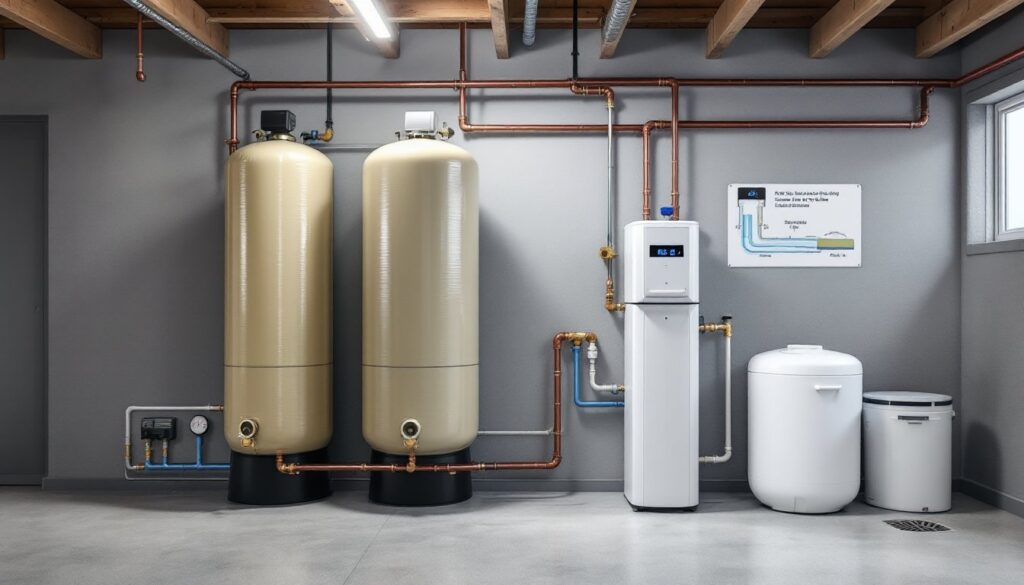
Compact footprint. Without a brine tank, many whole-house salt-free units fit into tighter mechanical rooms or crawl spaces.
These benefits make salt-free conditioners particularly attractive for eco-conscious homeowners and those who don’t want the recurring costs and space requirements of traditional systems.
Salt-Free vs. Traditional Water Softeners: Which Is Right for You?
Choosing between salt-free and traditional systems depends on water chemistry, household priorities, and expectations.
Performance on severe hardness. If water hardness exceeds 15 grains per gallon (gpg), traditional ion-exchange softeners deliver more dramatic results. They genuinely remove minerals, which improves lathering, reduces soap scum, and protects appliances more aggressively. Salt-free systems reduce scale formation but don’t eliminate hardness, so soap performance and spotting may still occur.
Appliance longevity. Both systems help. Traditional softeners prevent scale entirely: salt-free conditioners prevent adhesion. For tankless water heaters, which are especially vulnerable to scale buildup, traditional softening is often recommended by manufacturers. But, many home appliance reviews indicate that salt-free systems still extend appliance life significantly compared to untreated hard water.
Environmental and cost factors. Salt-free systems use no electricity, generate no wastewater, and require no consumables beyond eventual media replacement. Traditional softeners add ongoing salt costs, wastewater discharge, and minor electricity use for timers and valves.
Sodium in drinking water. Traditional softeners add roughly 8 mg of sodium per liter per grain of hardness removed. For a 10-gpg supply, that’s about 80 mg/L, noticeable for those on strict low-sodium diets. Salt-free systems don’t alter mineral content.
Installation complexity. Both are whole-house systems installed on the main water line after the pressure tank or meter. Salt-free units skip the drain line and electrical hookup, simplifying the install.
Best use cases: Choose traditional if you have very hard water, want true softness for laundry and bathing, and don’t mind maintenance. Choose salt-free if your hardness is moderate (under 15 gpg), you’re on a well or want to keep minerals, and you prioritize low maintenance and eco-friendliness.
Top Features to Look for When Buying a Whole House Salt-Free System
Not all salt-free conditioners are built alike. Focus on these features to match the system to your home and water conditions.
Flow rate capacity. Measured in gallons per minute (GPM), this dictates whether the system can handle peak household demand. A typical single-family home needs 10–15 GPM. Undersized units will bottleneck water pressure during simultaneous use (shower + dishwasher + irrigation). Check manufacturer specs and compare to your home’s peak draw.
Media type and lifespan. TAC media is the most common and generally lasts 5–7 years in moderate hardness. Some units use catalytic or ceramic media with different replacement intervals. Confirm replacement cost and availability, proprietary media can be expensive or hard to source.
Certifications. Look for NSF/ANSI Standard 61 (drinking water system components) and, ideally, testing to NSF/ANSI 444 (scale reduction). Third-party certification provides confidence that the unit performs as advertised.
Port size and connections. Most whole-house systems use 1-inch NPT or 1-inch push-fit connections. Verify compatibility with your existing plumbing. Larger homes or those with high flow demands may benefit from 1.25-inch or 1.5-inch ports.
Bypass valve. A built-in bypass simplifies maintenance and troubleshooting. It lets you isolate the unit without shutting off the whole house.
Warranty. Quality systems offer 5–10 year warranties on tanks and valves, with separate coverage for media. Read the fine print, some warranties require professional installation or periodic water testing.
Pre-filter compatibility. Sediment, chlorine, and iron can foul TAC media. Many manufacturers recommend a 5-micron sediment pre-filter. Some bundle it: others require separate purchase. Budget for this upfront.
Installation Guide: Setting Up Your Salt-Free Water Softener
Installing a whole-house salt-free water conditioner is a plumbing project within reach of confident DIYers. If local code requires a licensed plumber for main-line work, or if you’re uncomfortable cutting into copper or PEX, call a pro. Expect professional installation costs to range from $200–$500, though pricing varies by region and complexity. Many homeowners consult contractor cost guides to budget accurately before starting.
Tools and Materials
- Pipe cutter or hacksaw (for copper, PEX, or CPVC)
- Propane torch and solder (for copper) or PEX crimper/expansion tool (for PEX)
- Adjustable wrenches (two, for threaded fittings)
- Teflon tape or pipe thread sealant
- 5-gallon bucket and towels (to catch residual water)
- Bypass valve (if not included)
- Sediment pre-filter and housing (recommended)
- PPE: Safety glasses, gloves
Step-by-Step Installation
- Shut off the main water supply at the meter or well pressure tank. Open a downstream faucet to relieve pressure and drain residual water.
- Choose the install location. Place the unit after the pressure tank (well systems) or after the meter and main shutoff (municipal). Install upstream of any branch lines to treat the whole house. Allow 12–18 inches of clearance above the unit for future media replacement.
- Cut the main supply line. Measure twice. Use a pipe cutter for clean cuts. Deburr cut edges with a reamer or file.
- Install shutoff valves and unions on both sides of the unit. This allows isolation and removal without draining the entire system. Use threaded brass ball valves for reliability.
- Thread or solder connections. Wrap male threads with Teflon tape (clockwise, 3–4 wraps). For copper, clean, flux, and solder joints: allow to cool before pressure testing. For PEX, crimp or expand rings per manufacturer specs.
- Mount the conditioner. Some units hang on wall brackets: others sit on the floor. Ensure the tank is plumb to prevent uneven media distribution.
- Install the sediment pre-filter upstream of the conditioner. Use a clear housing to monitor sediment accumulation. A 5-micron spun polypropylene cartridge is standard.
- Restore water supply slowly. Open the main valve gradually, checking all joints for leaks. Tighten as needed. Run water through a downstream faucet for 3–5 minutes to flush installation debris and purge air.
- Check flow and pressure. Verify no significant pressure drop. If flow is weak, confirm unit is sized correctly and that no internal shipping caps were left in place.
Permit note: Most jurisdictions don’t require permits for non-structural plumbing like adding a conditioner, but check local codes. Backflow prevention may be required on certain well systems.
Maintenance Tips to Keep Your System Running Efficiently
Salt-free conditioners are low-maintenance, but a few routine tasks ensure long-term performance.
Replace sediment pre-filters every 3–6 months. High sediment loads shorten this interval. Clear housings make it easy to see when a filter is clogged. Mark your calendar or set a phone reminder.
Inspect for leaks quarterly. Check all threaded connections, unions, and the tank body. Tighten fittings as needed. Look for water stains or corrosion on nearby surfaces.
Monitor water pressure. A sudden drop may indicate a clogged pre-filter or fouled media. Test pressure with a gauge at a hose bib before and after the conditioner.
Replace TAC media per manufacturer schedule. Typically 5–7 years for moderate hardness. Heavy hardness or high iron content can shorten media life. Some units have a service reminder or date sticker. Media replacement is DIY-friendly: shut off water, remove the tank top, pour out old media, rinse the tank, refill with new media, and reassemble.
Flush the system annually. Even without backwashing, occasional flushing of the downstream plumbing helps clear any mineral fragments. Close the conditioner’s bypass valve, open a hose bib or laundry sink downstream, and run water for 5 minutes.
Test water quality every 1–2 years. If you notice renewed scale buildup, test for changes in hardness, pH, or iron. Municipal water chemistry can shift: well water can change seasonally. A shift may require media replacement or additional filtration.
Winter prep for unheated spaces. If the conditioner is in a garage or crawl space, insulate pipes and the tank to prevent freezing. Some homeowners install heat tape on supply lines. Frozen media can crack the tank, voiding warranties.
Keep installation and warranty docs accessible. Note the install date, media type, and replacement schedule. Many manufacturers offer online manuals and parts diagrams, bookmark them.
For routine service questions or unexpected issues, consulting home service provider reviews can connect homeowners with local plumbers experienced in conditioner systems.
Conclusion
Whole-house salt-free water conditioners deliver practical scale prevention without the salt, wastewater, or ongoing maintenance of traditional softeners. They’re ideal for homeowners with moderate hardness who want to protect appliances, reduce upkeep, and keep beneficial minerals in their water. Installation is straightforward for those comfortable with basic plumbing, and maintenance amounts to periodic filter swaps and eventual media replacement. If hard water has been shortening appliance life or leaving deposits, a salt-free system offers a sustainable, low-effort solution that fits tighter spaces and tighter budgets.