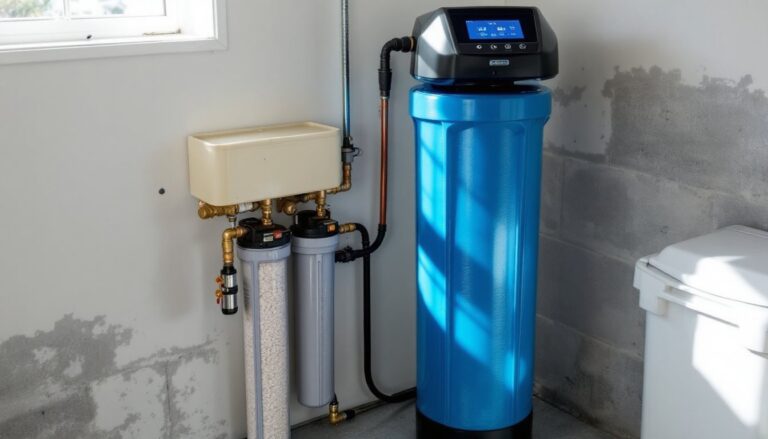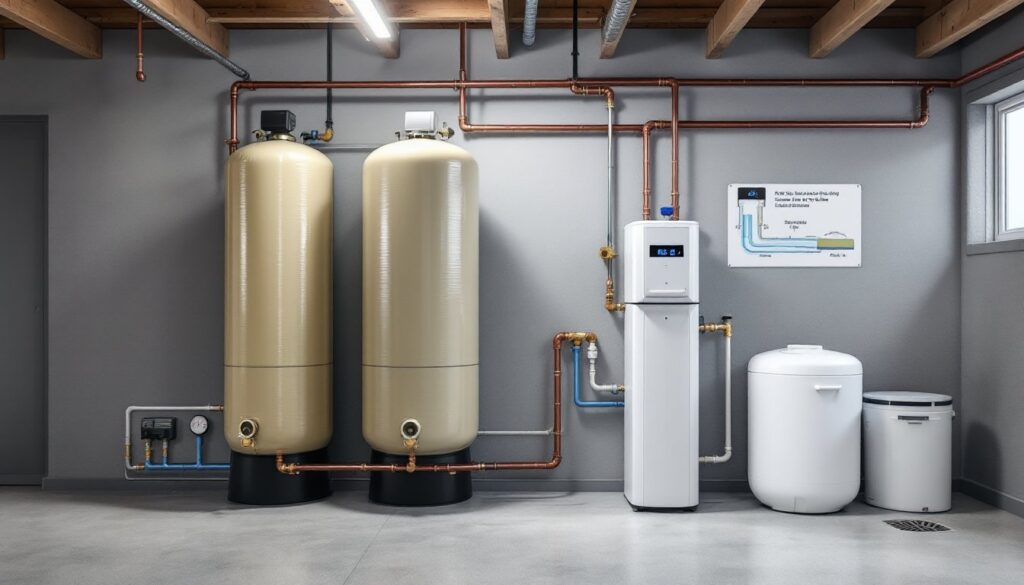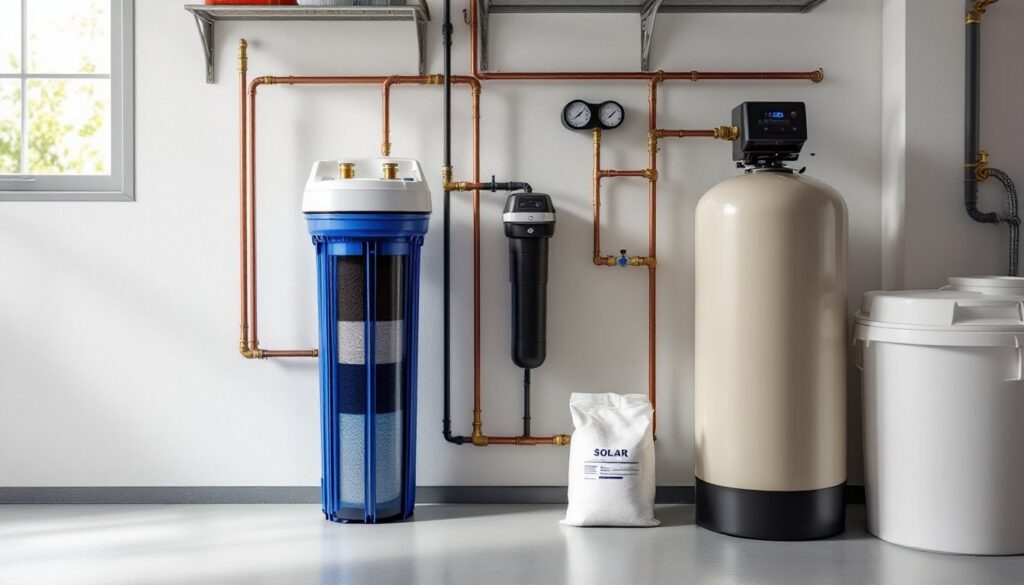

Hard water leaves soap scum on shower doors. Sediment clogs faucet aerators. Chlorine smell wafts from every tap. These aren’t just annoyances, they’re symptoms of water quality issues that a whole house filter and water softener can solve. Installing both systems transforms household water by addressing different problems: filters remove contaminants like sediment, chlorine, and particulates, while softeners eliminate hardness minerals that damage plumbing and appliances. For homeowners dealing with both contamination and mineral buildup, combining these two systems delivers comprehensive water treatment from the main line to every fixture in the home.
Table of Contents
ToggleKey Takeaways
- A whole house filter and water softener address different problems: filters remove contaminants like sediment and chlorine, while softeners eliminate hardness minerals that damage plumbing and appliances.
- Install the whole house filter before the water softener in your plumbing sequence to protect the softener’s resin beads from sediment and extend system lifespan.
- Water softeners can improve efficiency by up to 70% on water heaters, as just 1/2 inch of scale buildup reduces performance, making both systems essential for long appliance life.
- A family of four with 15 grains per gallon hardness needs a softener rated for at least 4,800 grains daily capacity, calculated by multiplying water usage by hardness level.
- Soft, filtered water requires 50% less soap and detergent while eliminating chemical taste and odor, resulting in significant savings on cleaning products and bottled water within 2-3 years.
- Get a comprehensive water test before purchasing to match filter media to your specific contaminants, ensuring your whole house filter system solves your actual water quality issues.
Understanding the Difference: Water Filters vs. Water Softeners
Water filters and water softeners tackle fundamentally different issues, and understanding that distinction prevents costly mistakes.
Whole house water filters remove physical contaminants and chemicals. They use various media, sediment filters for dirt and rust, activated carbon for chlorine and volatile organic compounds (VOCs), and sometimes specialized media for heavy metals or iron. Flow rates typically range from 10-15 gallons per minute (GPM) for standard residential systems. They improve taste, eliminate odors, and protect appliances from sediment damage.
Water softeners address mineral content, specifically calcium and magnesium that measure as “hardness” in grains per gallon (gpg). They use an ion exchange process: hard water flows through resin beads that swap hardness minerals for sodium or potassium ions. This prevents scale buildup in pipes, water heaters, and fixtures. Softeners don’t filter out sediment, chlorine, or other contaminants, they only remove hardness minerals.
A filter makes water cleaner. A softener makes it softer. Neither does both jobs, which is why many homeowners need the combination.
Why Install Both a Whole House Filter and Water Softener?
Installing both systems solves compound problems that plague many municipal and well water supplies.
Protection from sediment and scale: Sediment clogs softener valves and fouls resin beds, while hard water creates scale that reduces filter lifespan. The filter protects the softener, and the softener protects downstream fixtures from mineral buildup.
Extended appliance life: Water heaters operating with hard, unfiltered water accumulate scale and sediment twice as fast. The Department of Energy notes that just 1/2 inch of scale buildup reduces water heater efficiency by up to 70%. Tankless water heaters are especially vulnerable, scale buildup on heating elements can cause complete failure within years.
Comprehensive health and safety: Filters remove chlorine, lead, cysts, and other contaminants that softeners ignore. Softeners prevent the mineral deposits that harbor bacteria in pipes and fixtures. Together, they address both chemical and mineral water quality issues.
Better cleaning and less waste: Soft water requires 50% less soap and detergent for the same cleaning power. When that soft water is also filtered, it rinses cleaner and leaves no chemical taste or odor. Homeowners report significantly lower spending on cleaning products and bottled water.
The combination isn’t overkill, it’s comprehensive treatment for water that needs both filtration and softening, which describes most residential supplies in the U.S.
How to Choose the Right Whole House Water Filter
Selecting a whole house filter starts with testing your water and matching filter media to specific contaminants.
Get a water test: Municipal water reports identify chlorine levels, disinfection byproducts, and detected contaminants. For well water, pay for a comprehensive lab test covering bacteria, nitrates, heavy metals, hardness, and pH. Know what you’re filtering before buying equipment.
Match filter type to contaminants:
• Sediment filters (5-50 micron) remove sand, silt, rust, and particulates. Essential for well water and older municipal systems.
• Carbon filters remove chlorine, chloramine (requires catalytic carbon), VOCs, and improve taste/odor. Standard for city water.
• Multi-stage systems combine sediment pre-filters with carbon and sometimes specialized media for iron, sulfur, or heavy metals.
Size for adequate flow rate: A family of four needs at least 10-12 GPM to run multiple fixtures simultaneously without pressure drop. Check the filter’s flow rate at peak demand (morning showers, laundry running). Undersized filters create frustrating pressure loss.
Consider filter housing and media: Standard 10″x4.5″ or 20″x4.5″ cartridge housings are common and replacement filters are widely available. Tank-style systems with backwashing media (like catalytic carbon or multi-media) last longer between servicing but cost more upfront. Reviews of top-tested water filters show a wide range of performance and price points.
Port size matters: Most systems use 1-inch NPT ports. If your main water line is 3/4-inch, that’s usually fine, the system can still deliver adequate flow. Don’t oversize the filter ports beyond your plumbing capacity.
Selecting the Best Water Softener for Your Home
Water softener sizing depends on household water usage and hardness level, get both numbers before shopping.
Calculate your softener capacity: Multiply your daily water usage (average 80-100 gallons per person) by water hardness in gpg. A family of four with 15 gpg hardness needs to remove about 4,800 grains per day (4 people × 80 gallons × 15 gpg). Choose a softener rated for at least that daily capacity, with some buffer.
Softener sizes: Common residential capacities range from 24,000 to 64,000 grains. Larger capacity means less frequent regeneration cycles, which saves salt and water. But, resin sitting too long between cycles can develop bacterial growth, don’t massively oversize.
Regeneration style:
• Timer-based regenerates on a set schedule, regardless of actual water use. Simple but can waste salt if you’re away from home.
• Metered (demand-initiated) tracks actual water use and regenerates only when needed. More efficient for most households.
• Dual-tank systems provide continuous soft water even during regeneration. Necessary for large households or high water use.
Salt type and efficiency: Softeners use sodium chloride (rock, solar, or pellet salt) or potassium chloride for regeneration. Potassium costs 3-4 times more but adds no sodium to water, important for sodium-restricted diets. High-efficiency models use as little as 0.75 pounds of salt per 1,000 grains removed, compared to 3+ pounds for older units.
Bypass valve and installation requirements: Every softener needs a bypass valve for servicing and a drain line for backwash discharge. Check local codes, some jurisdictions restrict water softener discharge due to sodium content affecting septic systems or wastewater treatment.
Installation Order and Setup: Filter First or Softener First?
Always install the whole house filter before the water softener in the flow sequence. This order protects the softener and maximizes system performance.
Standard installation sequence from main line:
- Main water shutoff valve
- Pressure regulator (if required by code or to protect fixtures, typically set to 60-80 psi)
- Whole house water filter
- Water softener
- Distribution to fixtures
Why filter first: Sediment and particulates in unfiltered water foul softener resin beads and clog control valves. Pre-filtration extends softener life and reduces maintenance. Carbon filtration also removes chlorine, which can degrade softener resin over time.
Outdoor hose bibs and irrigation: Branch these off before the softener. Soft water wastes salt on outdoor uses and can harm plants (excess sodium). It’s fine to filter water for irrigation, but bypass the softener.
Installation considerations:
• Space requirements: Allow 24-36 inches clearance around both systems for filter changes and salt refills. Plan for a floor drain or drain line within 20 feet.
• Electrical: Most softeners need a 120V outlet for the control valve. Protect with a GFXCI outlet if installing in a damp location.
• Plumbing permits: Many jurisdictions require permits for main line plumbing modifications. Check local codes before cutting into your water supply.
• Hiring help: Unless you’re comfortable soldering copper or working with PEX, consider hiring a licensed plumber for the main line connections. Many home service providers offer flat-rate installation pricing for whole house water treatment systems.
DIY tip: Use SharkBite push-fit fittings for easier installation without soldering. They’re code-compliant in most areas for potable water and make future servicing simpler. Budget 3-5 hours for a DIY install if plumbing is accessible.
Maintenance Requirements and Long-Term Costs
Both systems require ongoing maintenance, but it’s straightforward and manageable for most homeowners.
Whole house filter maintenance:
• Sediment filters: Replace every 3-6 months depending on water quality. Cartridges cost $15-40 each.
• Carbon filters: Replace every 6-12 months. Standard cartridges run $30-60: tank-based carbon media can last 5-10 years before requiring replacement.
• Pressure monitoring: Install pressure gauges before and after the filter. A 10+ psi drop indicates a clogged filter needing replacement.
• Annual cost: Budget $80-200/year for filter cartridges.
Water softener maintenance:
• Salt refills: Keep the brine tank at least 1/3 full. A typical household uses 40-80 pounds of salt monthly. Salt costs $5-8 per 40-pound bag.
• Resin bed cleaning: Add resin cleaner (iron remover) every 3-4 months if you have iron or heavy sediment. Cost: $15-25 per treatment.
• Control valve check: Test regeneration cycles annually. Mechanical failures are rare but increase with age.
• Resin replacement: Softener resin lasts 10-20 years with proper maintenance. Professional replacement runs $300-500.
• Annual cost: Budget $100-200/year for salt, plus occasional resin cleaner.
System lifespan: Quality whole house filters last 10-15 years (housings and plumbing, media requires regular replacement). Water softeners last 15-25 years with proper maintenance. The upfront investment ranges from $1,200-3,500 for both systems plus installation.
DIY vs. professional servicing: Filter cartridge changes are simple, shut off water, relieve pressure, unscrew housing, swap cartridge. Most homeowners handle this easily. Softener salt refills are equally straightforward. For complex repairs or diagnostics, consider calling a water treatment specialist.
Cost savings offset maintenance: Reduced appliance repairs, extended water heater life (an extra 3-5 years), and lower soap usage typically offset maintenance costs within 2-3 years.
Conclusion
Combining a whole house filter and water softener delivers comprehensive water treatment that protects plumbing, extends appliance life, and improves water quality throughout the home. The investment pays for itself through reduced maintenance costs and eliminated bottled water purchases. Start with water testing, size both systems for your household’s needs, and install with the filter upstream of the softener for maximum protection and performance.