
Hard water’s a pain, spotted dishes, clogged pipes, scratchy clothes, and appliances that die years too soon. If you’re sick of scrubbing mineral buildup and replacing water heaters prematurely, a whole house water softener makes sense. But what’s it going to cost you? The answer depends on system type, household size, installation complexity, and whether you’re doing it yourself or hiring a plumber. This guide breaks down real-world pricing, compares system types, and helps you budget for both the upfront and ongoing costs of softening your water in 2026.
Table of Contents
ToggleKey Takeaways
- A whole house water softener cost ranges from $1,200 to $6,000 installed, with salt-based systems averaging $1,200 to $3,500 depending on capacity, household size, and installation complexity.
- Salt-based ion-exchange softeners are the most effective for hard water removal, while salt-free conditioners cost $1,500 to $3,500 installed but work best only for moderate hardness and require no ongoing salt expenses.
- Installation costs vary significantly by region and plumbing setup; homes with pre-plumbed softener loops save $300 to $800 in labor, while complex installations or main line work can add $400 or more.
- Ongoing annual maintenance costs average $75 to $200 for salt-based systems, including $50 to $100 in salt, $10 to $30 in wastewater, and occasional resin replacement every 10 to 20 years.
- DIY installation can save $300 to $1,000 in labor if you have plumbing experience, but professional installation ensures code compliance, warranty protection, and prevents costly leaks or permit violations.
- Test your water hardness level before choosing a system—water over 10 grains per gallon requires a larger capacity unit, while moderate hardness (5–10 grains) may justify a lower-cost salt-free conditioner instead.
Average Cost of a Whole House Water Softener System
For most homeowners, a whole house water softener system costs between $800 and $2,800 for the unit itself, with total installed costs ranging from $1,200 to $6,000 depending on system type, capacity, and labor.
A basic salt-based softener for a typical 3–4 person household runs $1,000 to $2,000 for the unit, plus $300 to $800 in professional installation if plumbing is straightforward. Larger homes with high water usage, multiple bathrooms, or more complex plumbing can push costs higher, $2,500 to $4,500 installed.
Salt-free conditioners (technically water conditioners, not softeners) generally cost $1,500 to $3,500 installed. They don’t remove hardness minerals but prevent scale buildup. If your water is moderately hard and you want low maintenance, they’re an option, but they won’t deliver the same soft-water feel as ion-exchange systems.
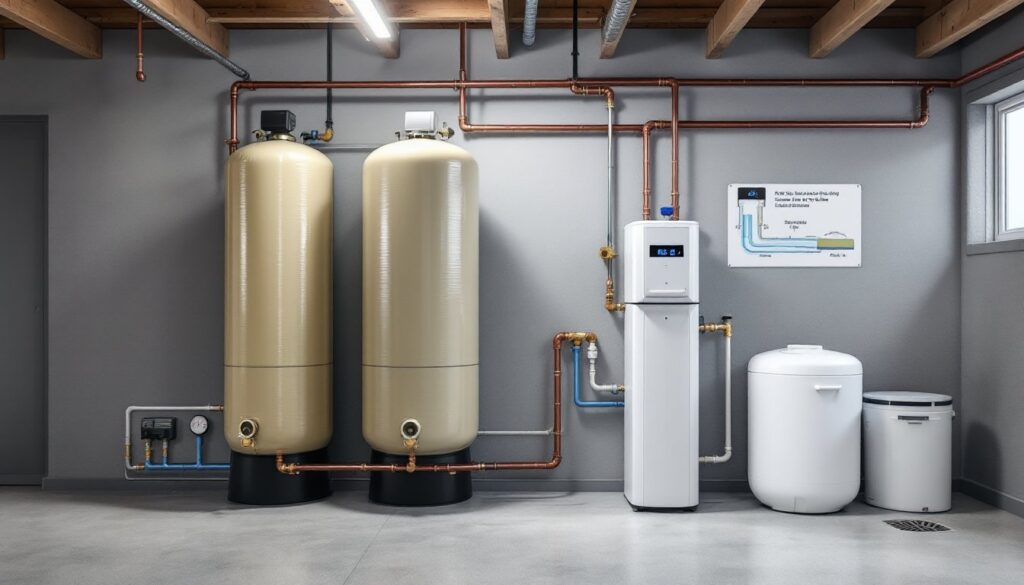
High-capacity or dual-tank systems for large homes or very hard water can exceed $5,000 installed. Add another $200 to $500 if your installation requires a loop system, drain line rerouting, or dedicated electrical circuits.
Pricing varies by region. Labor costs more in urban areas and coastal markets. Get at least two quotes from licensed plumbers before committing.
Cost Breakdown by System Type
Salt-Based Water Softeners
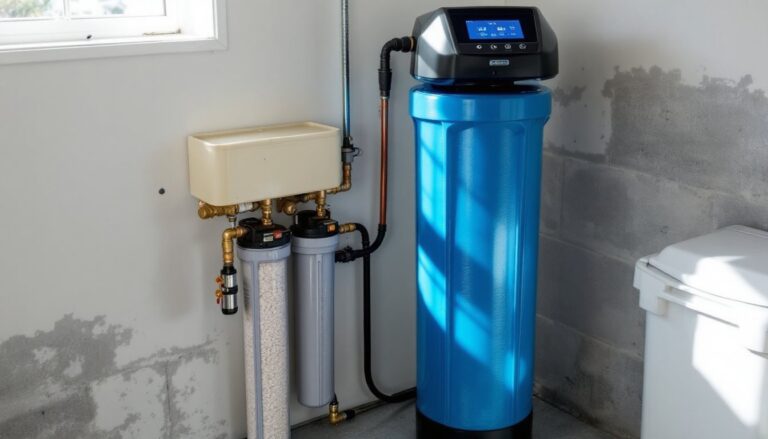
Salt-based (ion-exchange) softeners are the most common and effective solution for hard water. They swap calcium and magnesium ions for sodium ions, actually removing hardness from your water.
Unit cost: $600 to $2,500, depending on capacity (measured in grains). A 32,000-grain system handles 3–4 people: 48,000 to 64,000 grains suits larger households or very hard water (over 10 grains per gallon).
Installation cost: $300 to $1,000 for professional hookup, depending on existing plumbing. If your home has a water softener loop (pre-plumbed stub-outs near the main), installation’s faster and cheaper. Without a loop, expect the plumber to cut into the main line, install shutoff valves, add a drain line for backwash, and possibly run a dedicated outlet.
Total installed cost: $1,200 to $3,500 for most residential setups.
You’ll also need a brine tank (usually included) and space for both tanks, about 2 feet by 4 feet of floor space in a basement, garage, or utility room.
Key features that add cost: digital metering (regenerates on demand, saving salt), high-flow valves for homes with multiple fixtures running simultaneously, and NSF/ANSI 44 certification, which confirms the unit meets performance and safety standards.
Salt-Free Water Conditioners
Salt-free conditioners (also called descalers or template-assisted crystallization systems) change the structure of hardness minerals so they don’t stick to pipes and fixtures. They don’t remove minerals, so water isn’t technically “soft”, you won’t get that slick feel in the shower, and soap won’t lather as well.
Unit cost: $800 to $3,000. Higher-end models use catalytic media or electromagnetic treatment.
Installation cost: $200 to $600. Simpler than salt-based units because there’s no drain line, no backwash cycle, and no brine tank. Many are inline cartridge systems you install on the main supply line.
Total installed cost: $1,500 to $3,500.
Pros: No salt, no wastewater, minimal maintenance, no electricity required (for some models).
Cons: Doesn’t remove hardness. Not effective for very hard water (over 15 grains per gallon). Won’t improve soap performance or give you soft water benefits. Some performance data is less rigorous than ion-exchange systems.
They’re best for moderate hardness (5–10 grains per gallon) and homeowners who want scale prevention without ongoing salt costs or regeneration cycles.
Factors That Affect Installation Costs
Home size and water usage dictate system capacity. A 1,500-square-foot home with 2 bathrooms needs a smaller unit than a 3,500-square-foot home with 4 bathrooms and a high-efficiency washing machine running daily. Undersized systems regenerate too often, wasting salt and water: oversized units cost more upfront.
Water hardness level matters. Test your water (buy a kit for under $20, or check your municipal water report). Water over 10 grains per gallon is considered very hard and may require a larger or more robust system. The cost estimates for water softeners vary depending on hardness and household size.
Existing plumbing setup is a big cost factor. Homes built after the 1990s often have a pre-plumbed softener loop, a bypassed section of pipe with capped stub-outs near the water heater or main shutoff. If you’ve got a loop, installation’s straightforward. Without one, the plumber has to cut into copper or PEX, install tees and valves, route a drain line to a floor drain, sump, or standpipe (must meet local code, typically indirect drain with an air gap), and possibly add an outlet.
Location of installation affects labor. Basement or garage installs are easiest. Crawl spaces, tight utility closets, or outdoor installations (in mild climates) add time and cost.
Electrical and drainage requirements can add $100 to $400. Most salt-based systems need a standard 120V outlet nearby. If there’s no outlet within a few feet, an electrician has to add one. The drain line for backwash needs proper pitch and access to a drain, never directly into a sewer line (violates most plumbing codes).
Permits and code compliance: Some jurisdictions require a plumbing permit for water softener installation, especially if you’re modifying main supply lines. Permit costs run $50 to $200. Backflow prevention may also be required by local code, check with your municipality.
Additional components: If your home has low water pressure, you may need a pressure booster pump ($200 to $500). Homes on well water often need a sediment pre-filter ($50 to $150) to protect the softener resin.
DIY Installation vs. Professional Installation Costs
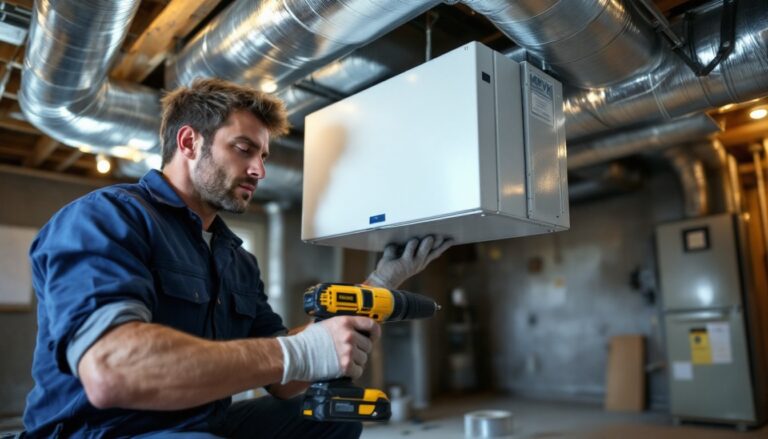
If you’ve got solid plumbing skills, a DIY install can save $300 to $1,000 in labor. You’ll still pay for the unit, fittings, and any necessary parts.
What you need for a DIY install:
- Basic plumbing tools: pipe cutter, adjustable wrenches, Teflon tape, soldering kit (for copper) or crimping tool (for PEX).
- Fittings and valves: expect to spend $50 to $150 on shutoff valves, compression fittings, drain line tubing, and clamps.
- Drain access: a nearby floor drain, standpipe, or sump. Must comply with local code (typically an indirect drain with an air gap).
- Electrical: a nearby 120V outlet. If you need to run a new circuit, hire an electrician.
- Time: plan for 4 to 8 hours if you’re experienced, longer if you’re learning as you go.
Difficulty level: Moderate to advanced. Cutting into the main supply line, soldering or crimping connections, setting up the drain line, and programming the control head all require confidence and attention to detail. Mistakes can cause leaks, water damage, or code violations.
When to hire a pro:
- You don’t have a softener loop and need main line work.
- Your home has complex plumbing (manifold systems, recirculation pumps, multiple zones).
- Local code requires a licensed plumber for the work.
- You’re not comfortable soldering copper or working with PEX.
Many homeowners exploring home improvement projects find that professional installation offers peace of mind and warranty protection. Professional installation includes proper sizing, code-compliant drain and electrical work, and usually a 1-year labor warranty. Total cost: $1,200 to $4,500 installed.
For straightforward installs with a loop, a handy DIYer can handle it. For anything more complex, the cost of a pro is worth it to avoid leaks, permit issues, or voiding the manufacturer’s warranty.
Ongoing Maintenance and Operating Costs
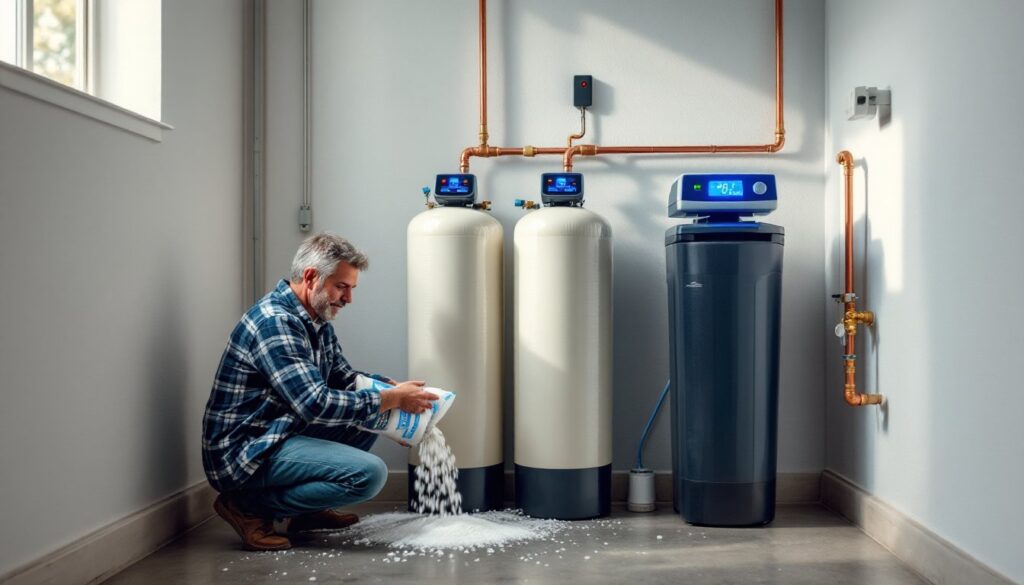
Salt costs are the biggest ongoing expense for ion-exchange softeners. A typical household uses 200 to 300 pounds of salt per year, depending on water hardness and usage. Salt pellets cost $5 to $10 per 40-pound bag, so budget $50 to $100 annually.
Use high-purity salt pellets (99%+ sodium chloride). Cheaper rock salt contains impurities that can foul the resin bed and reduce efficiency. Solar salt is a mid-range option.
Water and wastewater costs: During regeneration (backwash), a softener uses 25 to 65 gallons of water per cycle. For a system regenerating weekly, that’s roughly 1,300 to 3,400 gallons per year. At typical municipal water rates, that’s $10 to $30 annually.
Electricity: Systems with electronic control heads use $1 to $5 per year in power, negligible.
Resin replacement: The ion-exchange resin inside the tank lasts 10 to 20 years with proper maintenance. Replacement resin costs $100 to $300 plus labor if you’re not doing it yourself.
Routine maintenance:
- Check salt levels monthly. Keep the brine tank at least one-third full. Don’t overfill, salt should stay above the water line.
- Clean the brine tank annually. Remove any salt bridges (hardened crust) or sludge at the bottom.
- Inspect valves and seals for leaks.
- Sanitize the resin bed every 1 to 2 years using a resin cleaner or bleach solution (follow manufacturer instructions).
Professional servicing: Some homeowners schedule annual service calls ($100 to $200) for cleaning, testing, and adjustments. Many pros who’ve reviewed services on platforms like Angi recommend annual checkups for well water systems, which introduce more sediment and iron.
Salt-free conditioners have near-zero operating costs, no salt, no electricity (for many models), and media replacement every 3 to 5 years ($300 to $600 depending on the system).
Total annual operating cost for salt-based softeners: $75 to $200 for most households. Over a 15-year lifespan, that’s $1,125 to $3,000, so factor ongoing costs into your total investment when comparing systems.